

Greeting from the President
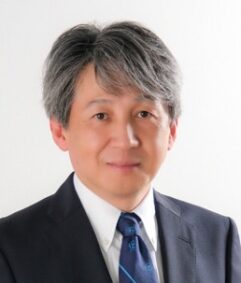 I am Satoshi Ieiri, and I am honored to have been appointed as the 27th President of the Japanese Society of Pediatric Surgeons (JSPS). Thanks to the tireless efforts of our many predecessors and current members, our society has grown and flourished. As I take the helm, I feel both the weight of responsibility and a deep sense of honor.
The Japanese Society of Pediatric Surgeons has now passed its 60th anniversary—what would be considered the age of kanreki in a person’s life. While it goes without saying that we must continue striving for further progress, I also believe that our role as a mature and established society has become increasingly important. The medical environment continues to evolve, driven by factors such as declining birthrates, population aging, globalization, and reforms in physicians’ working styles. We must respond to these changes while envisioning and shaping the next generation of pediatric surgical care.
Delivering peace of mind to children with surgical diseases and their families
Since its founding in 1964, the JSPS has worked to train high-quality pediatric surgeons capable of providing safe and reliable surgical care for children with illness. Thanks to the devoted efforts of our predecessors, over the past 60 years the survival outcomes of children in Japan with pediatric surgical diseases—including neonatal surgical conditions—have improved dramatically, reaching world-class levels. At the same time, long-term outcomes for those who have undergone pediatric surgery are now more important than ever. With the arrival of the so-called “100-year life” era, children who undergo surgery will often have 80 or more years ahead of them. It is no longer rare for such patients to require care for adult-onset diseases later in life. Though Japan’s declining birthrate is often discussed, the fact remains that children in need of pediatric surgical care continue to be born. Looking ahead, our society will continue to cultivate pediatric surgeons who provide holistic care with a view toward each patient’s lifelong health.
For the further advancement of the JSPS
- • Reforming the specialist and instructor training system: As birthrates decline, our current system for training pediatric surgery specialists and instructors must also evolve. While maintaining the fundamental goal of producing surgeons capable of delivering high-quality care, we will build a training system that ensures young physicians aspiring to become pediatric surgeons can receive sufficient, meaningful training.
- • Strengthening collaboration with related societies to influence policy: As a subspecialty of surgery with the Japan Surgical Society as its base, our field depends on surgical training but also requires close collaboration with other disciplines such as pediatrics and obstetrics/gynecology in clinical practice. We will work together with not only our parent society, but also the Japan Pediatric Society, the Japan Society of Perinatal and Neonatal Medicine, the Japanese Society of Pediatric Hematology/Oncology, the Japanese Society of Pediatric Urology, the Japanese Society of Pediatric Emergency Medicine, and the Council of Pediatric Surgical Societies of Japan, among others, to propose policies aimed at improving pediatric healthcare through agencies such as the Children and Families Agency.
- • Promoting research: Many pediatric surgical diseases still lack satisfactory treatment outcomes. Continued basic and clinical research is essential to improve care. As a society, we aim to generate cutting-edge evidence through nationwide clinical studies and international multicenter research, and to promote research that leads to the development of new treatments. We will establish a Research Grant program to encourage young pediatric surgeons to pursue research.
- • Promoting internationalization: As the COVID-19 pandemic has shown, globalization—both in its benefits and its challenges—is now an inescapable reality. Treatments and surgeries we take for granted in Japan are not always consistent with international standards of care. While preserving the fine, detail-oriented care characteristic of Japanese medicine, we must also incorporate the best aspects of global practices. To promote international exchange, we will establish a Travel Grant program to support young pediatric surgeons presenting at international conferences.
Finally, achieving these goals and ensuring the continued advancement of our society depends on the energy and vision of the next generation. Every year, the JSPS organizes a Summer School to give medical students and junior residents an opportunity to learn about pediatric surgery. We look forward to the participation of many young people.
In pediatric surgery, we often perform procedures to reconstruct organs in children born with congenital diseases. I believe this also means creating a future for these children. I hope that many young doctors will join us as colleagues in providing this wonderful and meaningful pediatric surgical care.
Summer 2025
Satoshi Ieiri, President Japanese Society of Pediatric Surgeons
(Professor and Chief, Department of Pediatric Surgery, Chair of Surgery, Kagoshima University)